

 Retro
 Country
 Modern
Surface-mounted or recessed LED profile?
A surface-mounted profile is installed on the surface, so you don't need to rout a groove. It is secured with tape, screws or clips, depending on the model. Twig XA is a surface-mounted profile that includes mounting clips and double-sided tape, while Blade is mounted against the wall with concealed mounting clips.
A recessed profile is installed in a routed groove, so it sits flush with the material. Apex is a recessed profile that you can position vertically or horizontally, for example in kitchen cabinets and drawers, display cabinets and wardrobes. The profile stays in the groove with light pressure or clips, without screws or glue.
LD8104 is a minimalist profile that is only 6 mm wide.
Recessing an LED strip: through groove or stopped groove
A through groove runs from one side of the material to the other without stopping. You don't need end caps because the groove has no rounded ends.
A stopped groove doesn't run all the way through; it starts and ends where you want it to, for example 30 mm from the bottom of a wardrobe and 30 mm from the top. Finish the profile with end caps that conceal the rounded ends left by routing. Ändavslut Apex 2-p + 2-p includes end caps for both through and stopped grooves.
Use a router or similar tool to make a precise groove. Check the profile dimensions in the product description before routing. If you're unsure, a carpenter can help. The groove determines how well the profile fits and how neat the result looks. You don't need to rout a groove for surface mounting.
Plan the position and length
First decide where you want the light and what you need it for: more lighting in the kitchen, wardrobe or display cabinet. The profiles are 2000 mm long. Saw them to the desired length for an exact fit.
Straight or angled profile?
If you want the light to shine into a kitchen cabinet or drawer, onto clothes in a wardrobe or toward the wall, an angled profile is a good choice. Blade is 10 mm thick and surface-mounted against the wall. You can choose whether the light shines toward or away from the wall. It works under kitchen cabinet doors to illuminate the countertop and in shelves. Blade is available in aluminum and matte black.
If you want light directed straight ahead, you have several options: Apex, Miss, 8112 and LD8104. Miss is a decorative profile placed horizontally, for example in bookcases, under countertops and under drawers. 8112 has a beam angle that provides glare-free light. Diffusers and end caps are available for 8112 and LD8104.
For more flexible lighting, there's LED-strip Flexy AT6 PRO. It has no visible diodes, can be shaped straight or curved and has a minimum bend radius of 25 mm.
What you need for a complete lighting setup
Your lighting setup consists of several parts. Here's what a complete installation includes:
- LED profile in a 2000 mm length, for example Apex or Blade.
- Diffuser that spreads the light evenly. Diffusers are available for 8112, LD8104 and Twig XA, among others.
- End caps that give the edges a neat finish, for example Apex, 8112, Twig XA and Blade.
- LED strip, for example Flexy AT6 PRO.
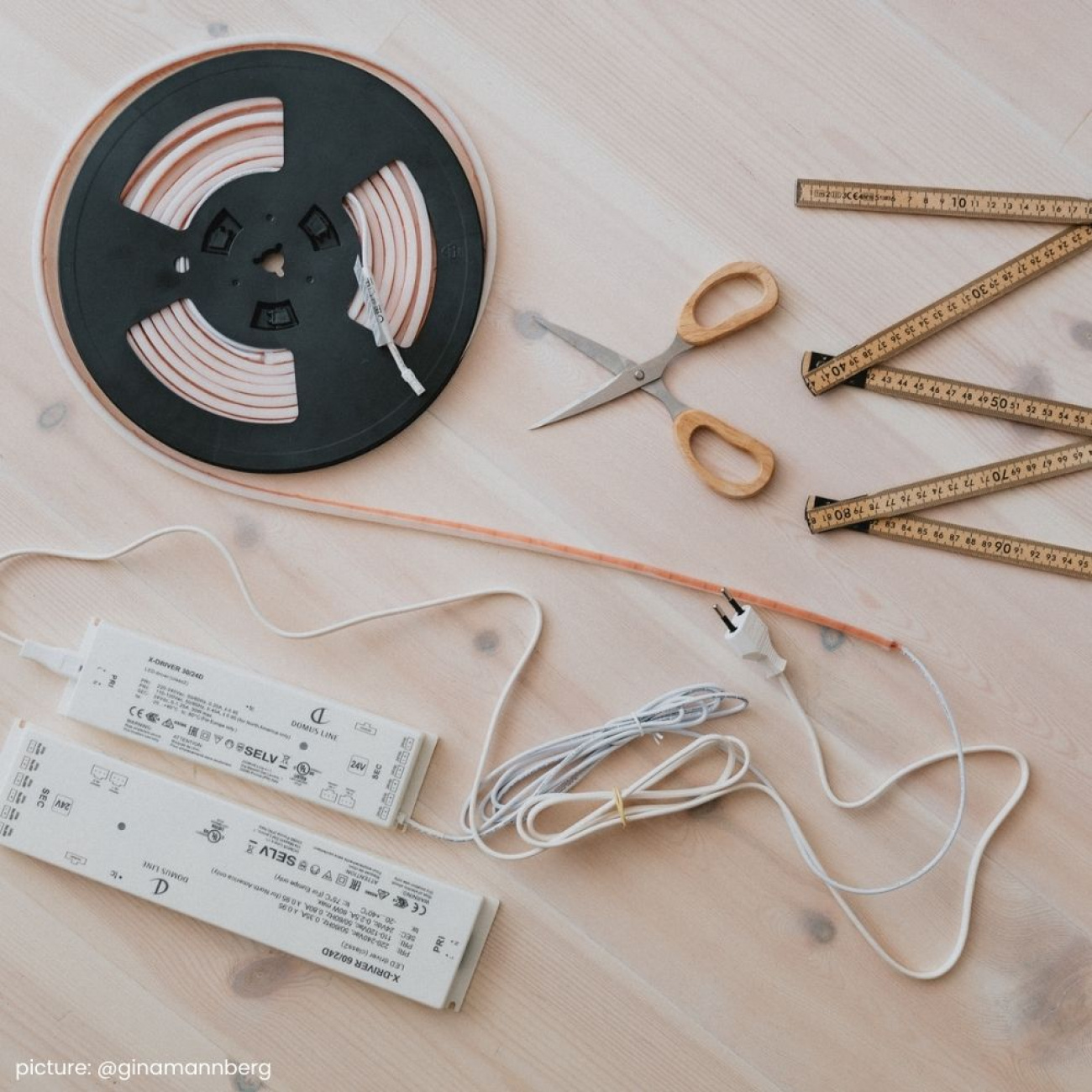
- Driver that matches the strip, for example Drivdon Triac 24V / 50 W, dimbart. Choose a driver with a higher power rating than the strip's total wattage.
- Mounting parts: clips and tape are included with Twig XA, and Blade comes with concealed mounting clips.
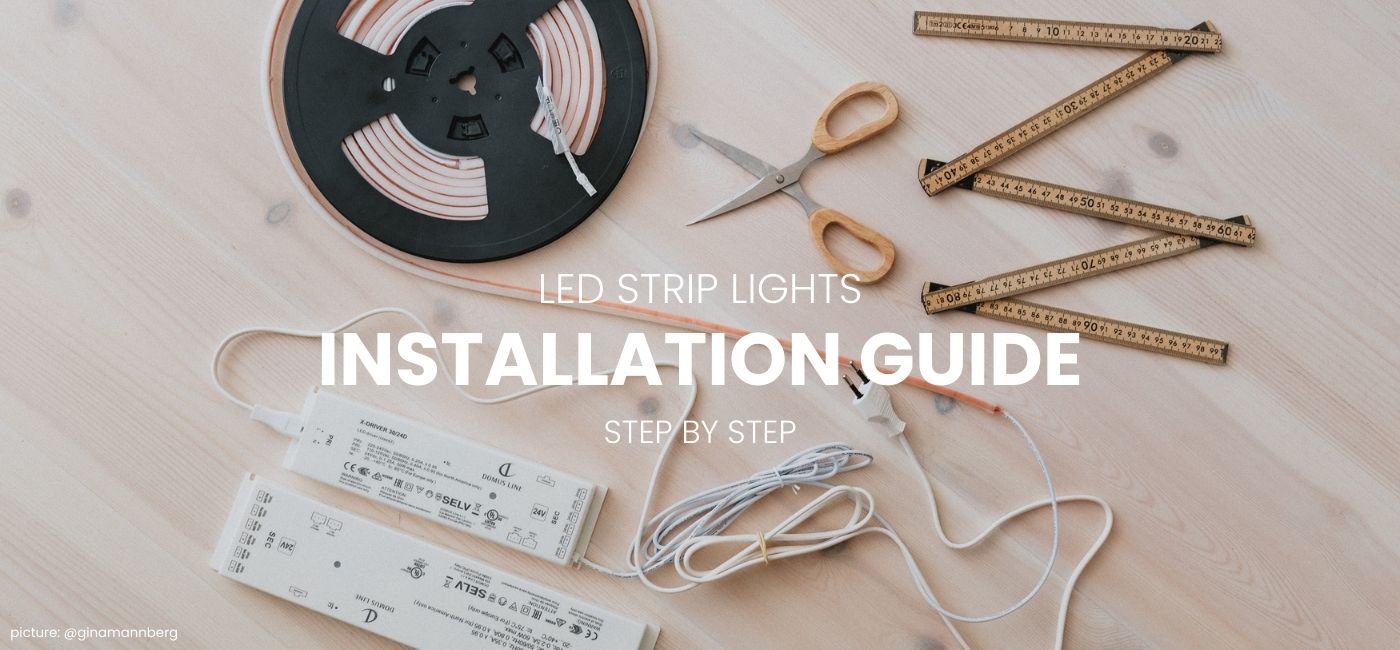
- Tools: tape measure, hacksaw, scissors, screwdriver and, for recessed installation, a router.
How to install an LED strip
- Measure. Decide how long the lighting should be using a tape measure or folding ruler. Mark the same measurement on the profile, diffuser and strip, somewhere that won't be visible once the lighting is installed.
- Cut. Cut the profile and diffuser at the marks, for example with a hacksaw. You can cut the LED strip with scissors, but only at the marked cutting points. If you cut in the wrong place, the disconnected diodes won't light up.
- Assemble the parts. How you do this depends on the profile you've chosen. Below, we show you how to install two different profiles.
Installing Apex: recessed in a routed groove
Apex is a recessed LED profile that, together with an LED strip, provides even light without visible diodes.
- Place the pre-cut LED strip in the Apex profile. The profile has a groove that fits the strip.
- Choose end caps. Different end caps are used for through and stopped grooves. Ändavslut Apex 2-p + 2-p includes both types.
- Connect the driver to the LED strip and check that everything works before installation.
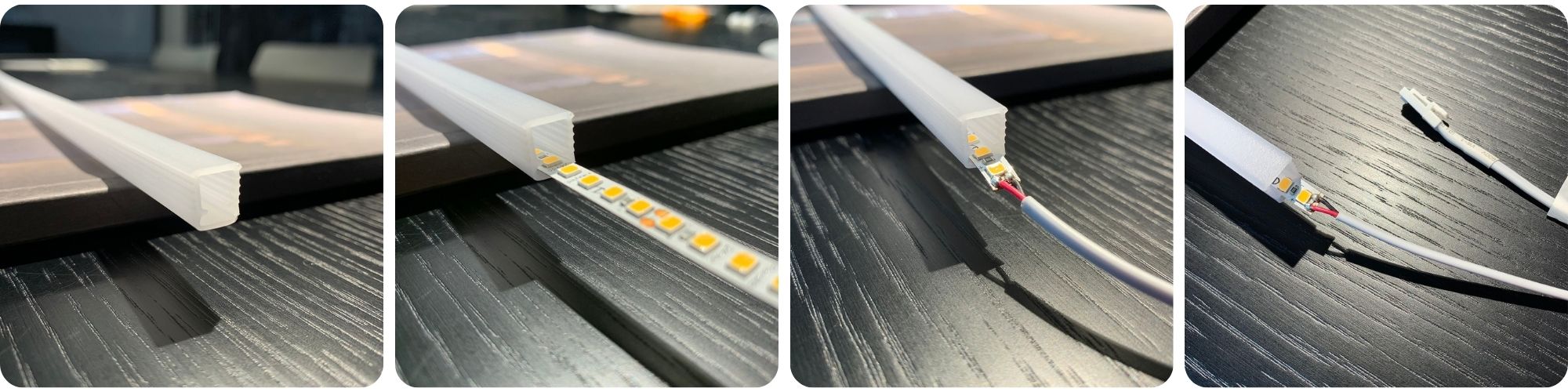
- If the strip lights up, place the profile and strip in the routed groove. Consider where the cable will exit. In a wardrobe, you can conceal the cable by passing it through a pre-drilled hole in the top.
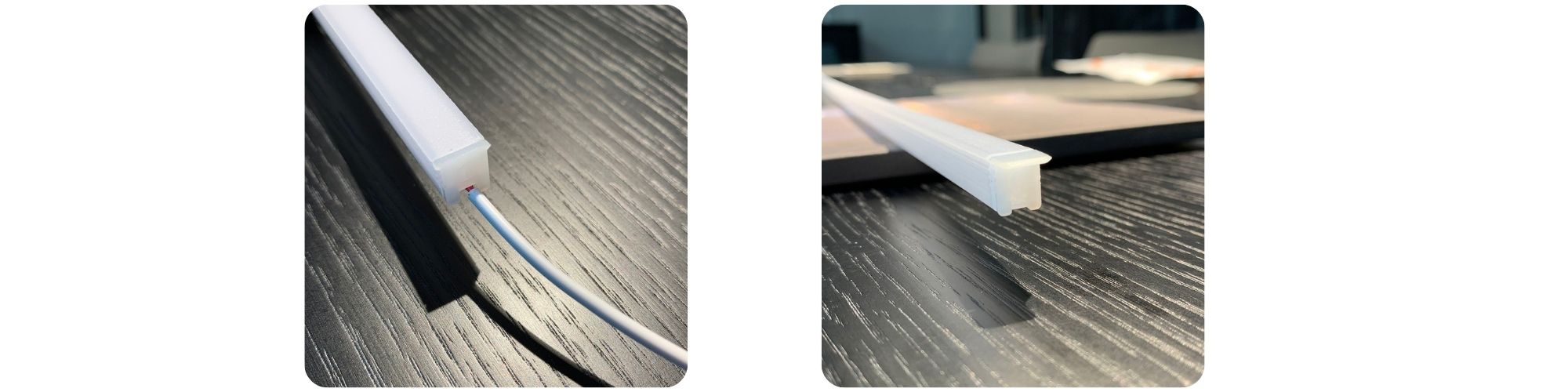
- Measure the cable length and decide where to place the driver. If the cable is too short, extension cables are available.
- Disconnect the power, position the driver and connect the profile to it. If you want to connect the lighting to a wall switch, contact an electrician.

Installing Blade: surface-mounted against the wall
Blade is 10 mm thick and surface-mounted against the wall with concealed mounting clips. It works well under kitchen cabinet doors to illuminate the countertop, and in shelves.
- Screw the concealed mounting clips into place. Pre-drilling is a good idea. Use a screwdriver instead of a power drill, as it's difficult to reach with the drill and a screwdriver is gentler on the products.
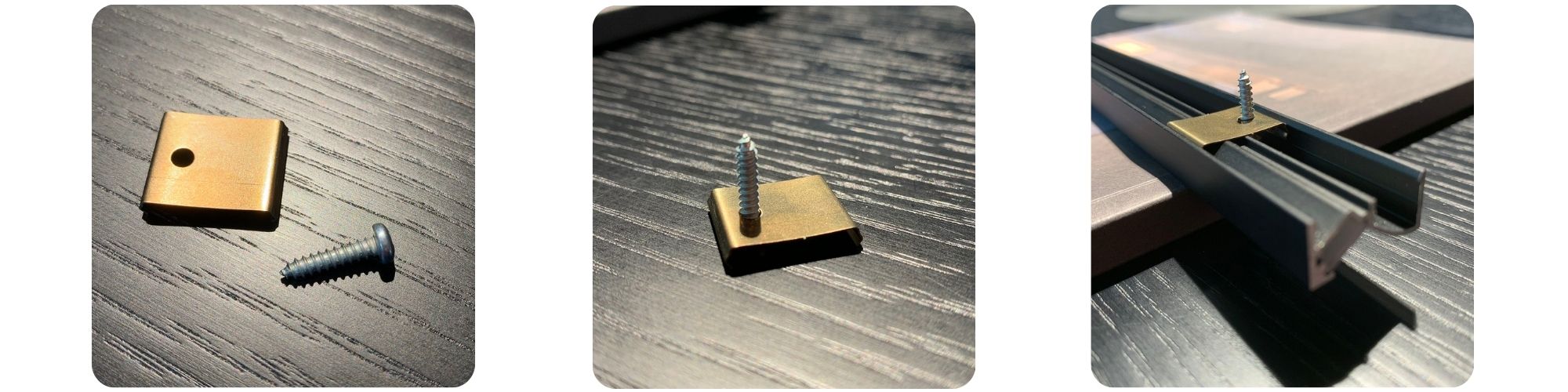
- Place the prepared LED strip in the profile. First measure where the strip will sit before removing the protective backing from the tape, so you know where the diodes will be. Then remove the backing, stick the strip in place and press lightly with your fingers to secure it.
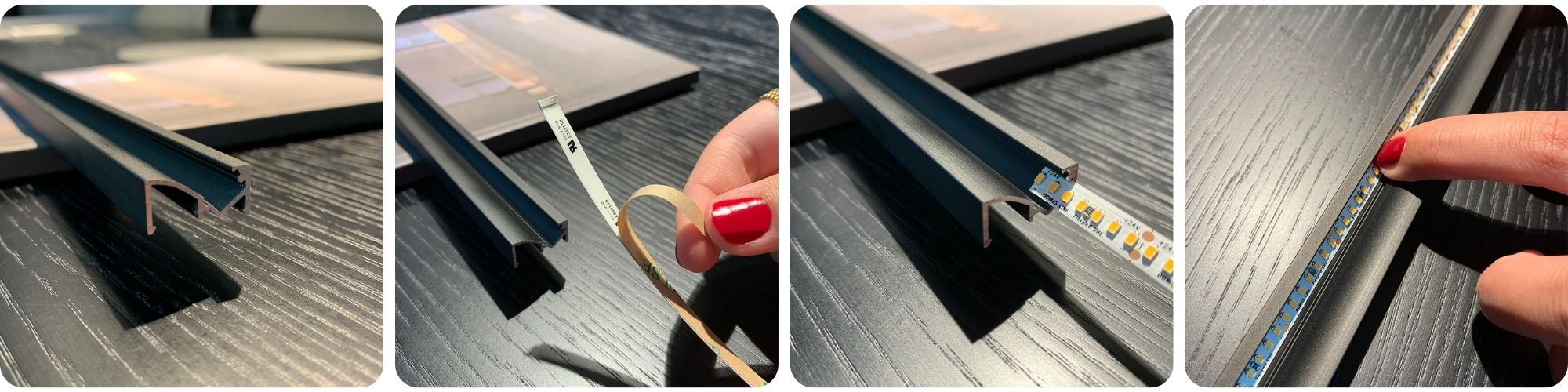
- Insert the diffuser into the profile's other groove.
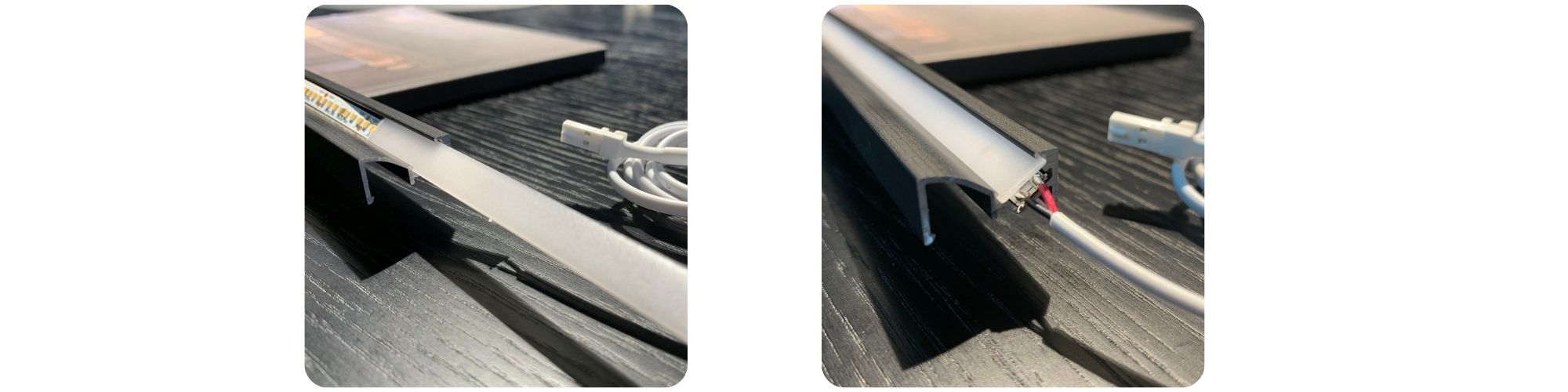
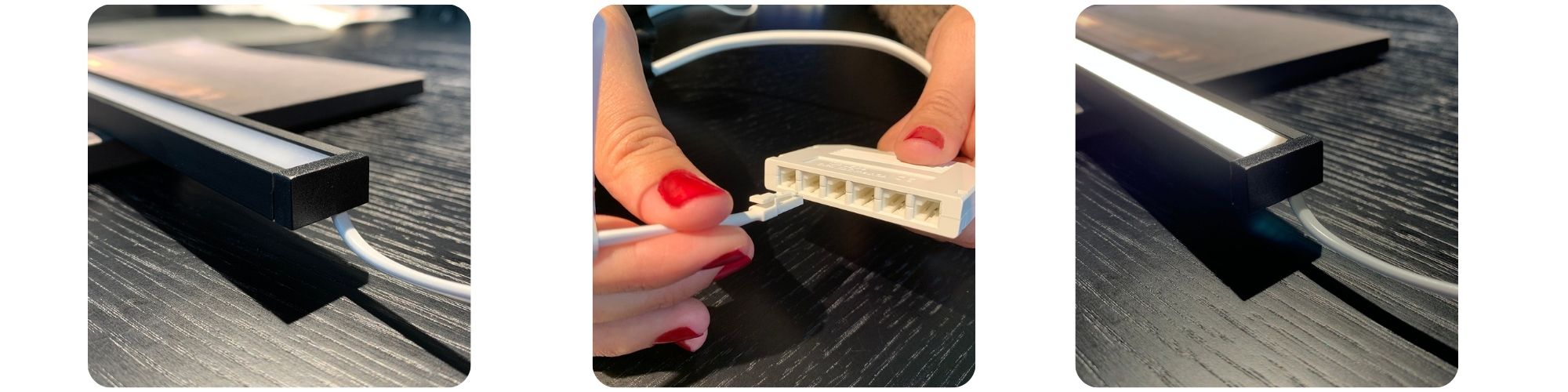
- Install the end caps by clicking them onto the ends of the profile. Once the profile is assembled, connect the driver to the LED strip to check that everything is connected correctly. This is easier to do before the profile is mounted.
- Decide where the cable will run. If you need to drill a hole, do it before mounting the profile on the wall.
- If the strip lights up when connected, you can attach the profile to the mounting clips. Disconnect the power, then gently click the profile into the clips.
- Measure the cable length and decide where to place the driver. If the cable is too short, extension cables are available. Disconnect the power, position the driver and connect the profile to it.
- If you want to connect the lighting to a wall switch, contact an electrician.
Find your new lighting
Explore our LED strips and profiles, drivers and transformers and other lighting for kitchens, wardrobes and display cabinets.


